Overview of the Oak Ridge Reservation
Advocates for the Oak Ridge Reservation actively support the United States Department of Energy’s (DOE) continued stewardship of ORR resources in support of current and future DOE missions. Satellite imagery shows the ORR to be a relatively large and nearly continuous island of forest within an otherwise fragmented landscape dominated by urban/suburban development and agriculture. The value of ORR is greatly enhanced by its size and the undeveloped nature of the resource.
The Oak Ridge Reservation (ORR) is a unique national resource in support of DOE’s science and technology missions. The ORR is home to three major DOE facility complexes: the East Tennessee Technology Park (ETTP), the National Security Administration’s Y-12 National Security Complex, and Oak Ridge National Laboratory. The 33,699-acre reservation is located in Roane and Anderson counties in east Tennessee, mostly within the corporate limits of the City of Oak Ridge.
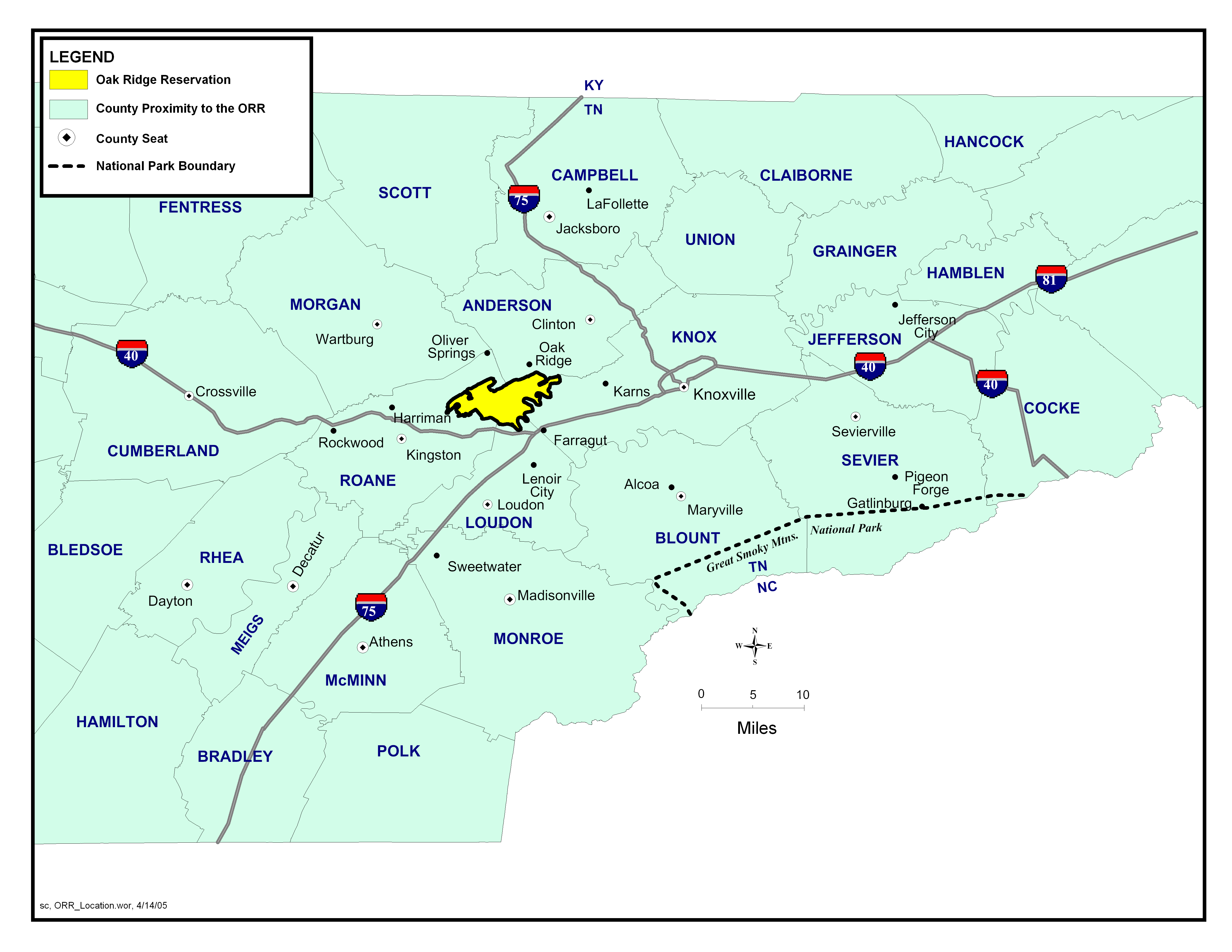 For over seven decades, government missions and operations have been the predominant factors driving development and utilization of ORR lands. From 1942 through 1948, the federal government acquired through eminent domain approximately 54,998 acres for siting and establishing a security and safety buffer around facilities used for large-scale production of fissionable material for the world’s first nuclear weapons. After 1948, an additional 3,584 acres were acquired. Of the original 58,582 acres, 24,833 acres have been transferred to private and other governmental entities, with 33,966 acres remaining under DOE management (DOE/ORO/01-2264, May 2008).
Land within the ORR serves multiple uses in meeting the mission goals and objectives of DOE. Uses of the land surrounding the developed sites include safety, security, and emergency planning; research, demonstration, and education; siting and maintenance of infrastructure; and environmental regulatory monitoring and remediation of past environmental insults. Other land uses supporting DOE land management responsibilities include wildlife management, protecting cultural and historic sites, wildland fire prevention, land stewardship activities, and public outdoor recreational use.
Being a relatively large land resource with complex physical characteristics and diverse natural resources, the ORR provides a critical foundation supporting DOE’s environmental research missions and also provides the security- and safety-buffered acreage to support existing facilities and new facilities such as the Spallation Neutron Source.